


Article
Untangling Root‑Knot Nematodes
by Dr Ash Martin PhD BSc(For)Hons
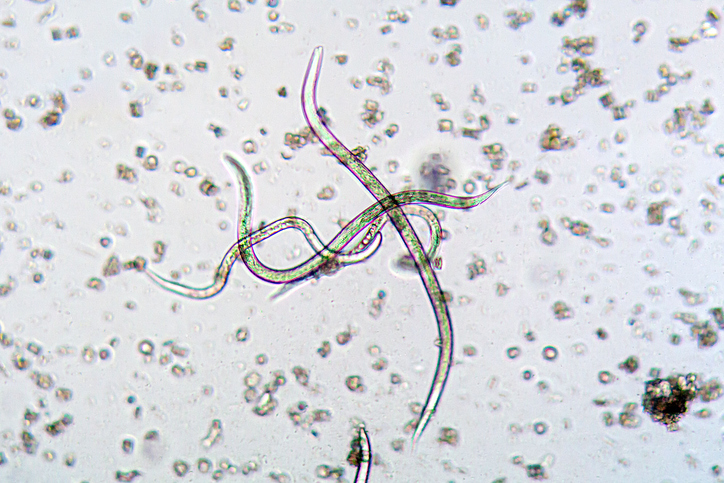
Root‑knot nematodes (Meloidogyne spp.) are one of the most damaging soilborne pests in Australian vegetable production. This guide explains how they behave, why they spread so quickly, and which soil‑health practices help keep populations below damaging levels.
What they did: This helpful review brings together Australian research and industry experience on root‑knot nematodes, covering their biology, symptoms, population dynamics, environmental drivers, and the full suite of management options. It outlines how monitoring, cultural practices, resistant crops, soil amendments, biological control, and chemicals can be integrated into a long‑term nematode management plan.
What they found:
- Root‑knot nematodes thrive in warm, moist, porous soils and can complete a generation in as little as 5–8 weeks.
- Each female can produce up to 1,000 eggs, allowing populations to explode during a single vegetable crop.
- Symptoms above ground (stunting, yellowing, wilting) are non‑specific; root galling is the key diagnostic sign.
- Damage increases rapidly when nematode numbers at planting exceed threshold levels.
- Sandy and sandy‑loam soils are most vulnerable; clay soils generally restrict movement unless highly aggregated.
- Moisture is essential for nematode activity—dry soil slows or stops movement and infection.
- Warm‑climate species (M. javanica, M. incognita, M. arenaria) dominate mainland Australia; cool‑climate species (M. hapla, M. fallax) dominate southern and elevated regions.
- Monitoring is essential: nematodes are patchy in fields and cannot be reliably detected without proper sampling.
- Bare fallow, resistant break crops, and trap crops can significantly reduce populations when used strategically.
- Organic amendments (composts, manures, biofumigants) improve soil structure and microbial activity, helping suppress nematodes.
- Soil solarisation can reduce populations in warm regions but requires specific conditions to be effective.
- Biological control organisms (e.g., Trichoderma, Paecilomyces, Pasteuria) show promise but vary in field reliability.
- Chemical options exist (non‑volatile nematicides and fumigants), but many are costly, disruptive to soil biology, or prone to enhanced biodegradation.
- Long‑term success requires integrating multiple practices rather than relying on a single tactic.
What this means for you:
- Know your numbers. Regular soil testing is the foundation of nematode management—populations must be measured before planting.
- Break the cycle. Use resistant break crops or trap crops to starve nematodes between vegetable crops.
- Build soil biology. Organic matter, composts, and biofumigant crops improve soil structure and support beneficial microbes that compete with nematodes.
- Reduce stress. Good water and nutrient management helps crops tolerate low to moderate nematode pressure.
- Act early. Once populations explode mid‑season, options are limited—pre‑plant decisions matter most.
- Use chemicals strategically. Nematicides and fumigants should be reserved for high‑pressure situations and integrated with non‑chemical practices.
- Protect soil health. Practices that improve structure, reduce compaction, and maintain moisture balance make soils less favourable for nematodes.
Root‑knot nematodes are persistent, fast‑multiplying pests, but they can be managed by building healthier soils, breaking host cycles, and making informed decisions based on monitoring. No single tool is enough – success comes from combining cultural, biological, and chemical strategies into a long‑term, soil‑focused management plan.
> Think you might have nematode problems? Our Nem Wise test measures the numbers of different types of parasitic and beneficial nematodes in your sample. Plant-parasitic nematodes can all damage and distort roots as part of their normal feeding and reproductive behaviours. However, some species of nematodes (‘free-living’) do not harm plants, but reduce parasitic nematodes and play an important role in soil health and nutrient cycling. If you’re serious about managing nematode problems, Nem Wise is for you.
Read the full article:
Horticulture Australia Limited (2014). Management of Root Knot Nematode in Vegetable Crops.
(Requires PDF viewer)
Not sure which tests to ask for?
Use our selector to find out exactly which tests you need
We’ve designed a selector that will help you choose exactly the right tests to meet your specific requirements: